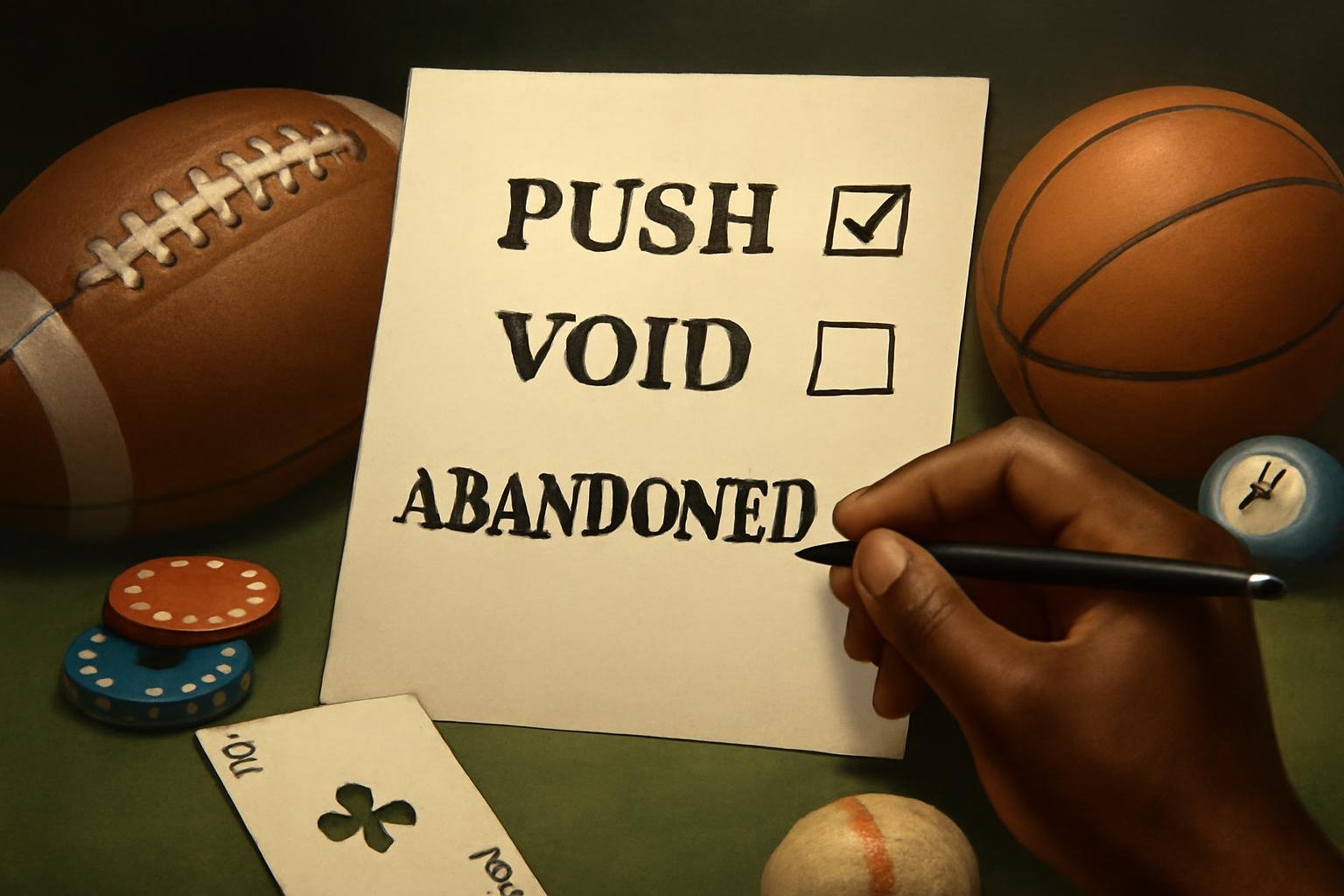
A sports bet is not always settled as a win or loss. A match can be abandoned, a player may not start, or the final score may land exactly on a betting line. In those cases, the operator’s settlement rules determine what happens to the wager. Knowing the common outcomes can help you understand a bet slip and spot important terms before placing a wager.
What does “settlement” mean?
Settlement is the process of applying the rules for a market to the event’s result and updating the bet accordingly. The displayed score alone may not answer every question: a market can depend on the final result, a particular period, or a player’s participation. Rules vary by sport, market, and operator, so check the terms that apply to your specific bet.
Pushes: when the result meets the line
A push generally occurs when the outcome exactly matches a line, leaving no winner or loser for that market. For example, if a team is offered at a three-point handicap and finishes with a margin of exactly three points, the handicap bet may be a push. In many cases, the stake is returned, but the bet’s terms decide how it is handled.
Push rules matter in accumulators, also called parlays. A pushed selection may be removed and the remaining selections recalculated, rather than causing the whole ticket to lose. The precise treatment depends on the operator’s rules and the bet type. Read the settlement information before assuming that a push works the same way on every ticket.
Voids: when a selection is cancelled
A void is a selection that is treated as no action under the applicable rules. The stake is commonly returned for a single bet, while a void leg in an accumulator may be removed from the calculation. A void is not necessarily a judgment that the bet was “wrong”; it can result from a qualifying event being cancelled or a market condition not being met.
Common situations that may lead to a void include:
- An event is cancelled or does not begin.
- A market is offered in error, subject to the operator’s stated correction rules.
- A player-proposition selection does not meet the participation conditions stated for that market.
- An event or contest format changes in a way covered by the house rules.
These are examples, not universal standards. For instance, a player selection might require the athlete to start, take part, or record a specific action. The wording on the market and the operator’s rules determine which condition applies.
Abandoned, postponed, or interrupted events
Postponed events and abandoned games are not always treated alike. A postponement may leave a bet open if the event resumes within a time window set by the operator. If it does not, some markets may be voided. An abandoned match may be settled using the result at the time of interruption, or treated as void, depending on the sport, market, and stated rules.
There may also be different outcomes within one event. A market on a completed period could potentially be settled while a full-game market remains unresolved. Do not assume every selection on a ticket follows the same timeline or outcome.
A quick checklist before placing a bet
- Check whether the market covers regulation time only, extra time, or another defined period.
- Look for rules on pushes, abandoned events, postponements, and participant eligibility.
- For accumulators, check how void or pushed legs affect the remaining selections.
- Keep the bet confirmation and review the settlement explanation if an outcome is unclear.
When comparing platforms, settlement rules deserve attention alongside the other practical factors in choosing a football bookmaker. A broader overview of online sports betting can help put the betting process in context, while it is also worth understanding the downsides of gambling.
The practical takeaway
Before betting, identify the exact market and read the rules for unusual outcomes—not just the headline odds. If a result is marked void, pushed, or pending, compare the decision with the operator’s written terms and ask customer support to explain the relevant rule. Sports betting involves risk; follow local laws, set limits, and do not wager money needed for essentials.